


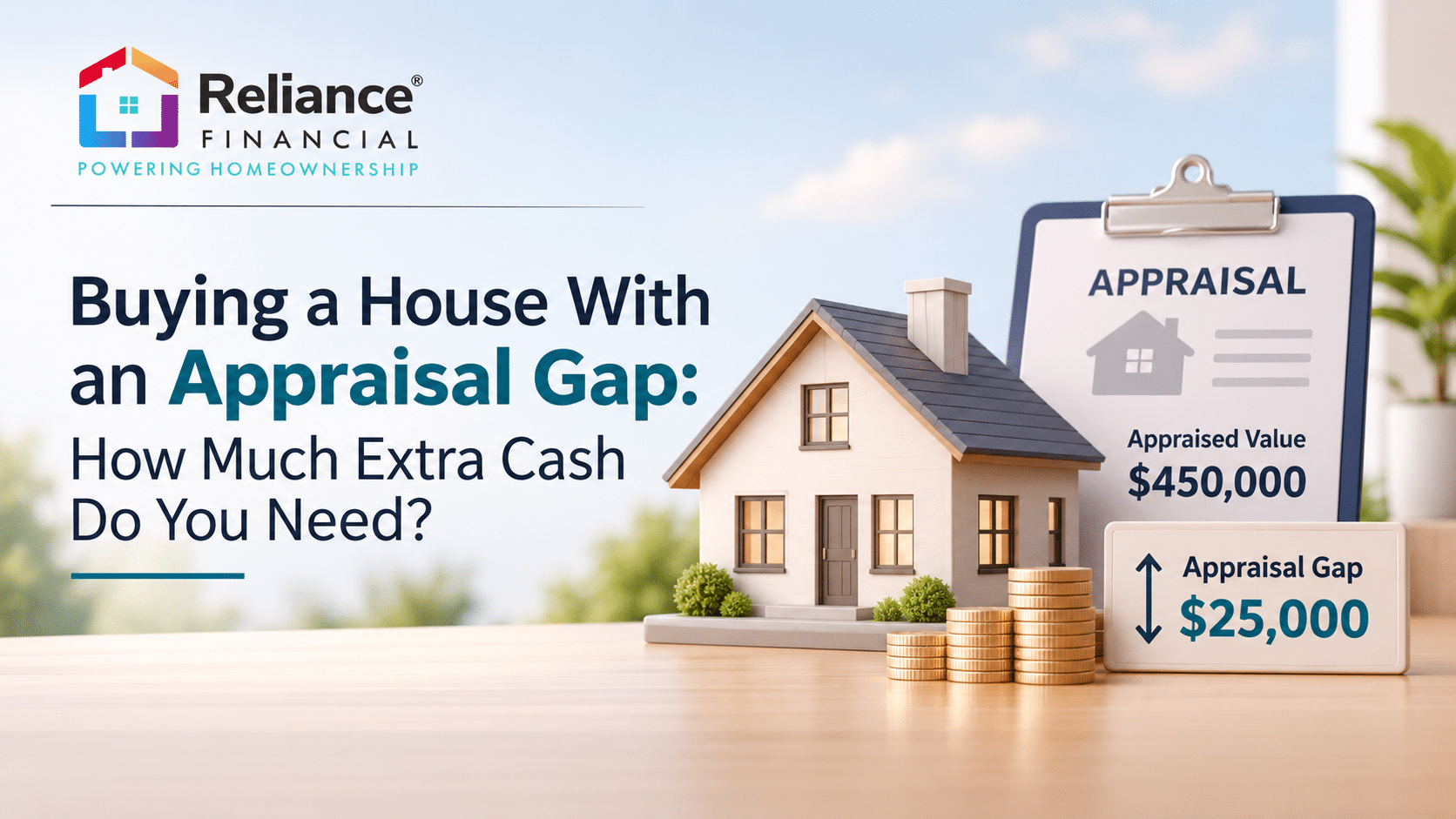
You’ve been looking for a home, and you’ve found one. You won the bidding war and signed the contract. Then the lender’s appraisal comes in at a value lower than the price you agreed to pay. This is an appraisal gap, and it can change an easygoing purchase into a scramble for cash. In a highly competitive market, gaps are very common and buyers who understand how to calculate the gap before they make an offer are far better placed to protect both their savings and their deal.
This article explains what an appraisal gap is, how to calculate the extra cash you may need, the options available to cover the gap, and the risks associated witwh bridging it.
What Is an Appraisal Gap?
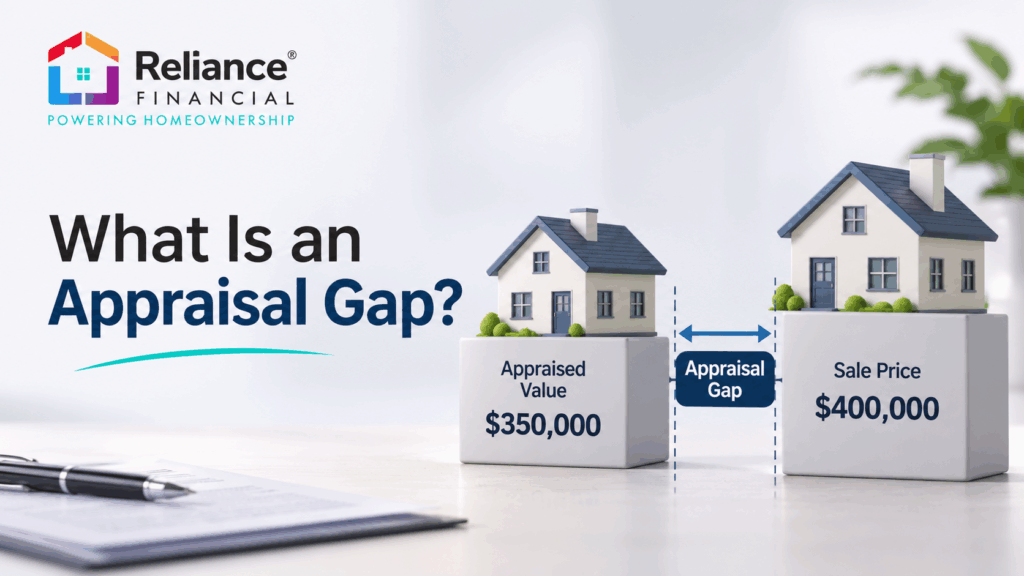
An appraisal gap is the difference between the contract price of a home and the value assigned to it by a licensed appraiser. If you agree to pay $450,000 and the home appraises at $430,000, the gap is then $20,000.
The gap matters because lenders base your loan amount on the lower of the purchase price or the appraised value. The lender will not lend against value that the property does not appear to have. This means the difference must be covered in another way, and in most cases, that means paying out of your own pocket.
Why Appraisal Gaps Happen?
Appraisers rely mainly on recent comparable sales, usually from the previous three to six months. When prices rise quickly or buyers compete aggressively, the offers being accepted today can exceed the values supported by the sales data an appraiser uses. Common causes include:
- Bidding wars: Multiple offers push the price above what recent sales support.
- Waived or limited contingencies: Buyers who offer above the asking price often expect a lower appraisal.
- Limited comparables: Unique homes, rural properties or thin markets give appraisers fewer comparable properties to work with.
- Condition and upgrades: Renovations that appeal to buyers may not add dollar-for-dollar value in the appraiser’s eyes.
- Rapidly changing markets: Rising or falling home prices can quickly make comparable sales data outdated.
How Much Extra Cash Do You Actually Need?
Simply put, the extra cash you need depends on the size of the gap and your loan-to-value ratio. Because the lender finances only a percentage of the appraised value, a lower appraisal reduces the amount you can borrow, leaving you to cover the shortfall.
Here is an example with a 10 down payment, a $450,000 purchase price and a $430,000 appraisal:
| Item | Without gap | With $20,000 gap |
| Purchase price | $450,000 | $450,000 |
| Appraised value | $450,000 | $430,000 |
| Maximum loan (90% of appraised value) | $405,000 | $387,000 |
| Down payment needed | $45,000 | $63,000 |
| Extra cash required | — | $18,000 |
Notice that the extra cash is $18,000, not the full $20,000 appraisal gap. Your loan is 90% of the appraised value, so a $20,000 drop in value reduces the loan by $18,000 (90% of $20,000). You must replace exactly that amount with cash. As a rule of thumb, the extra cash needed equals the appraisal gap multiplied by your loan-to-value ratio, assuming you still pay the full contract price. Always confirm the exact amount with your lender, as loan programs requirements and mortgage insurance can affect the calculation.
Remember that this is in addition to your closing costs, which typically range 2 to 5% of the loan amount, and any reserves your lender requires. When you plan your budget, add the potential appraisal gap to these costs rather than treating it as a replacement for them.
Appraisal Gap Coverage Clauses
Many competitive offers include an appraisal gap clause, sometimes called an appraisal gap guarantee. It is a written communication to pay up to a specified amount of cash if the appraisal value falls short. For example, a buyer might agree to cover a gap of up to $15,000.
Such a clause makes your offer more attractive because the seller knows a low appraisal will not automatically derail the sale. But it also creates a binding commitment. If the gap is $15,000 or less, you are responsible for covering the agreed amount in cash. If the gap is larger, you usually have the right to renegotiate, pay the difference or walk away, depending on how the clause is worded. Have your agent or attorney draft the language carefully, and never commit more than you can comfortably afford.
Ways to Cover or Reduce the Gap
A low appraisal does not always mean you must simply write a bigger check. Consider these options before you commit:
- Negotiate a lower price: Share the appraisal with the seller and ask them to reduce the price to the appraised value, or to meet you halfway.
- Request a reconsideration of value: If you or your agent can provide stronger comparable sales or identify upgrades the appraiser overlooked, your lender can request a review of the appraisal.
- Split the difference: Sellers who want to close often agree to lower the price partway while you cover the rest.
- Use savings or reserves: Using cash on hand is the most common solution, but avoid draining your emergency fund entirely.
- Increase your down payment: Making a larger down payment can reduce your loan amount and monthly payment, though it uses cash you may need elsewhere.
- Order a second appraisal: This is not always possible, but some lenders allow it when there is evidence of an error.
- Walk away if you have protection: If your contract has an appraisal contingency, you can usually cancel and recover your earnest money.
Risks of Bridging an Appraisal Gap
Paying more than a home’s appraised value means you are putting cash into an asset that is worth less than you paid for it, at least on paper. If you need to sell or refinance soon, you may find that you owe more than the home could sell for. You also start with less equity than expected, which reduces your financial cushion if home prices drop.
There is also the liquidity risk. Cash used to cover a gap is cash you cannot use for repairs, moving costs or emergencies. A home that looks like a bargain today can become a strain if the roof needs replacing three months after closing and your savings are gone.
Checklist Before You Offer
- Know your ceiling: Decide in advance the maximum gap you can afford to cover.
- Keep a buffer: Set aside savings for closing costs, repairs and emergencies.
- Ask for local data: Your agent can review recent comparable sales and tell you how often homes in the area appraise low.
- Talk to your lender early: Confirm how your loan program handles a low appraisal.
- Protect your earnest money: Understand exactly when you can and cannot cancel.
Final Thoughts
An appraisal gap is manageable when you plan for it. At Reliance Financial, we suggest to calculate your potential shortfall before you submit an offer, set a firm limit on how much you are willing to cover, and negotiate when the numbers do not support the price. A little preparation can help you compete in a tough market without putting your financial stability at risk.
Frequently Asked Questions
1. What is an appraisal gap in simple terms?
It is the amount by which the agreed purchase price exceeds the home’s appraised value. The buyer generally must cover this difference in cash because the lender will lend only on the lower appraised value.
2. How much cash should I set aside for a possible appraisal gap?
There is no universal amount, but many buyers in competitive areas plan for between 3% and 5% of the purchase price, in addition to their down payment and closing costs. Your agent can provide a more accurate estimate by checking how often nearby homes have appraised below their sale prices.
3. Does the full gap always come out of my pocket?
Not always. You can negotiate a lower purchase price, request an appraisal review, or split the difference with the seller. Also, as the example shows, your loan still covers a percentage of the lower appraised value, so the additional cash you need may be less than the appraisal gap itself.
4. Can I get my earnest money back if the appraisal is low?
Only if your contract includes an appraisal contingency and you cancel within its deadline. If you waived the contingency or agreed to cover an appraisal gap, you may lose your earnest money deposit if you walk away from the purchase.
5. Can gift funds or other assistance be used to cover the gap?
Often yes, but rules vary by loan program. Lenders usually require documentation of gift funds, and some programs limit sources of funds used for the down payment. Check with your lender before relying on this.
6. Should I waive the appraisal contingency to win a house?
Waiving it can make your offer more competitive, but it also exposes you to the full appraisal gap. Only consider this option if you have substantial cash reserves and are comfortable paying above the appraised value.
7. Can an appraisal be challenged?
Yes. Through a reconsideration of value, you can submit additional comparable sales or point out factual errors. Success is not guaranteed,but requesting a review may be worthwhile when you have strong supporting evidence.