
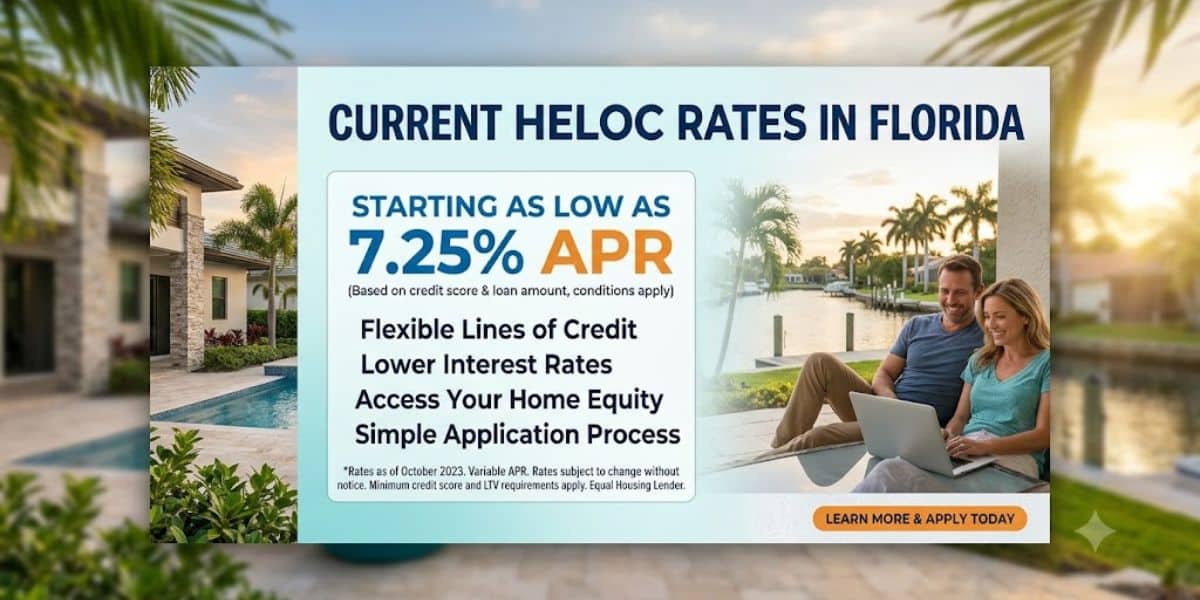
For Florida homeowners considering a Home Equity Line of Credit (HELOC) in 2026, there are a variety of options available, with rates that can vary significantly from one financial institution to another, including credit unions, community banks, and large national lenders.
Whether you are planning a home renovation, consolidating debt, or covering an unexpected expense, understanding current Florida HELOC rates can help you make a more informed borrowing decision. While HELOC rates in Florida may be lower than the national average, the rate you qualify for will depend on several factors, including your credit profile, loan-to-value ratio, income, and overall financial situation.
The professional team at Reliance Financial is here to help you understand current Florida HELOC rates, the factors that influence them, and the questions borrowers commonly ask. Our goal is to help you make the most of your home equity and choose a financing strategy that fits your needs.
Where Do Florida HELOC Rates Stand Today?
Florida homeowners are finding HELOC rates that are comparable to – or in many cases, better than – the national environment. All over the state, the average variable HELOC rate is currently hovering around 8.10%, which is comfortably below the general national average of roughly 7.85% to 9.35% (the variation depends on the source and the time of quoting). In contrast, many credit unions and local banks and community lenders in Florida are promoting introductory rates of 4.49% to 5.99% for six to twenty-four months, after which the rate quote jumps to a variable 6.75% to 8.75%.
Lenders that are nationally available: Online lenders usually offer a greater bandwidth (usually 6.70% – 15.49% APR depending on credit profile, loan-to-value, and line size). The following chart summarizes what you can expect by lender type.
| Loan Provider | Initial APR Percentage | Rate Following Initial Period | Other Considerations |
| Credit Unions | 4.49% – 5.99% | 6.75% – 8.75% | There are no closing or appraisal fees |
| Community Banks | 5.75% – 6.75% | 6.75% – 8.00% | Discount for previous business relationship |
| Internet and national banks | 6.70% – 6.99% | 6.75% – 15.49% | Advance approval process and extensive services |
| Florida average | 8.10% | Variable | A bit below the national average |
All rates are provided as general example ranges based on current market data and are subject to weekly fluctuations. Actual offers will depend on your credit profile, debt-to-income ratio, property location, and the individual lender’s underwriting criteria. Be sure to request a personalized quote before making a direct comparison between lenders.
What Determines Your HELOC Rate in Florida?
Because a HELOC is a variable-rate product, the interest rate can change over time. Typically, the rate is based on the Wall Street Journal Prime Rate, plus or minus a margin set by the lender. The lender’s margin and final rate are influenced by several factors, including:
Credit score: A score of 720 or higher is typically needed to access the most competitive advertised rates, while scores in the 620–670 range may be sufficient to qualify with some lenders.
Loan-to-value (LTV) ratio: Many Florida lenders generally limit combined LTV ratios to approximately 75%–95%. A combined LTV below 80% may help borrowers qualify for more competitive rates.
Line amount and draw structure: Larger credit lines and longer draw periods, often around 10 years followed by a 15–20-year repayment period, may have different pricing than smaller lines with shorter draw periods.
Property type and location: Condos, investment properties, and coastal or beach homes may have different pricing due to factors such as property risk, insurance costs, and lender-specific guidelines.
Introductory promotions: Many Florida credit unions provide fixed introductory rates for 6 to 24 months to new members, then convert to a variable rate.
Why Florida’s HELOC Market Looks the Way It Does?
Florida remains one of the largest and most competitive HELOC markets in the nation, which can benefit borrowers. The state has a strong concentration of large national lenders, regional institutions, and credit unions. Greater competition among lenders can help keep pricing and margins competitive for borrowers.
However, home equity borrowing power in Florida can be significantly influenced by homeowners insurance costs. Premiums may be higher in coastal and hurricane-prone areas, potentially offsetting some of the savings created by competitive HELOC rates. Additionally, Florida’s homestead exemption laws and the federally required three-day right of rescission are important considerations for homeowners before taking out a HELOC. Understanding these provisions can help borrowers make informed decisions about accessing their home equity.
Fixed-Rate vs. Variable-Rate HELOCs
Most HELOCs in Florida are a variable-rate product. That means your interest rate moves up and down depending on the prime rate (and changes at least monthly). Increasingly, lenders are offering fixed-rate HELOCs, or the option to convert all or part of your line balance at a fixed rate after drawing.
This may appeal if you’d like fixed monthly payments on a big purchase (new kitchen!)
but like the flexibility of a line of credit on the smaller stuff.
When interest rates are forecasted to go up, a fixed-rate drawdown can keep your budget safe. When rates are forecasted to stay the same or go down, a variable drawdown may be more beneficial in the long run. An expert from a loan provider or financial advisor can help you evaluate which option works best for you.
How to Get the Best HELOC Rate in Florida?
A little research can make a big difference in getting a lower rate. Think about doing the following before you apply:
Get your credit score checked and improved before you apply – 20-30 points better could land you a lower pricing tier.
Always be aware of your home’s current value and calculate your loan-to-value (LTV) ratio in advance so you have a better understanding of which lenders and loan options you may qualify for.
Shop around with at least three to five lenders, including local credit unions, regional banks, and national online lenders. Introductory offers, interest rates, fees, and lender margins can vary significantly, so comparing multiple options can help you find the most competitive terms.
Inquire about costs- some lenders will pay your closing costs and appraisal fees; these are as significant as the headline rate.
Note the timing: introductory or promotional rates change from time to time, and the same rate that you may be quoted now might not be available in a couple of months.
Consider the rate cap structure, as many HELOCs have a lifetime maximum rate (like 17-18%) which limits the size of any rate increases.
Is a HELOC Right for You Right Now?
Let’s dig deeper into this question. Florida HELOC rates can be slightly lower than national averages, and many lenders are also offering promotional introductory pricing. For homeowners who have a clear plan for how they’ll use the funds, whether for home improvements, debt consolidation, education expenses, or establishing a cash reserve, a HELOC may be worth considering.
Because a HELOC is secured by your home, its interest rate may be lower than rates on credit cards or unsecured personal loans. However, homeowners should borrow prudently and have a clear repayment strategy in place. Once the draw period ends, payments typically shift to include both principal and interest, which can result in higher monthly payments.
Talk to Reliance Financial About Your HELOC Options
No two borrowers are the same, and the advertised rate you see online is not necessarily the rate you will be offered. At Reliance Financial, we help Florida homeowners compare current HELOC rates, understand the fine print, and evaluate options based on their individual financial needs and circumstances. Whether you’re exploring a HELOC for the first time or looking to refinance an existing line of credit into more manageable terms, our team can help you understand your options and find a financing solution that fits your goals.
FAQs
What is the average HELOC rate in Florida right now?
An average HELOC APR in Florida is now about 8.10%, with the national average at about the same level. Rates can be higher or lower depending on the institution, as credit unions tend to have lower introductory rates. National lenders have a wider variation in introductory rates based on the applicant’s credit and ltv ratio.
Are credit unions cheaper than banks for HELOCs?
Yes, in most cases. Many Florida credit unions advertise introductory rates as low as 4.49%-4.99% APR and beat most major banks. After an introductory period of 6-12 months, these rates usually convert to a variable rate.
What factors affect my HELOC interest rate?
Your rate is determined by your credit score, loan-to-value ratio, your combined debt ratio, and the margin over the Prime Rate established by the lender. If your credit score is above 680 and your LTV ratio is low, you can expect the lowest rates available.
Is a HELOC rate fixed or variable in Florida?
Most Florida HELOCs have a variable rate associated with the Prime Rate. However, there are a few lenders that offer fixed-rate introductory periods or fixed-rate conversion options. Make sure you are made aware of whether the rate quoted is an introductory rate or the true ongoing rate.
How much equity do I need to qualify for a HELOC?
Generally, most Florida lenders expect you to keep 15%-20% equity when you borrow, so the loan-to-value ratios are normally between 80% and 95%, depending on the lender and credit score.
How can I get the best HELOC rate with Reliance Financial?
The most effective methods for getting a competitive rate include boosting your credit score, paying down existing debt, and shopping around with many different lenders for quotes. Reliance Financial can assist you in analyzing your options and determining which HELOC design will best meet your needs.