
Ever surprised when your mortgage payment suddenly increases despite paying on time? One month, the payment is manageable, and the next, it feels unbearable. This leaves homeowners confused, frustrated, and concerned about long-term affordability. Many homeowners wonder why their mortgage payments increase. This detailed guide explains everything you need to know about Why Do Mortgage Payments Go Up?
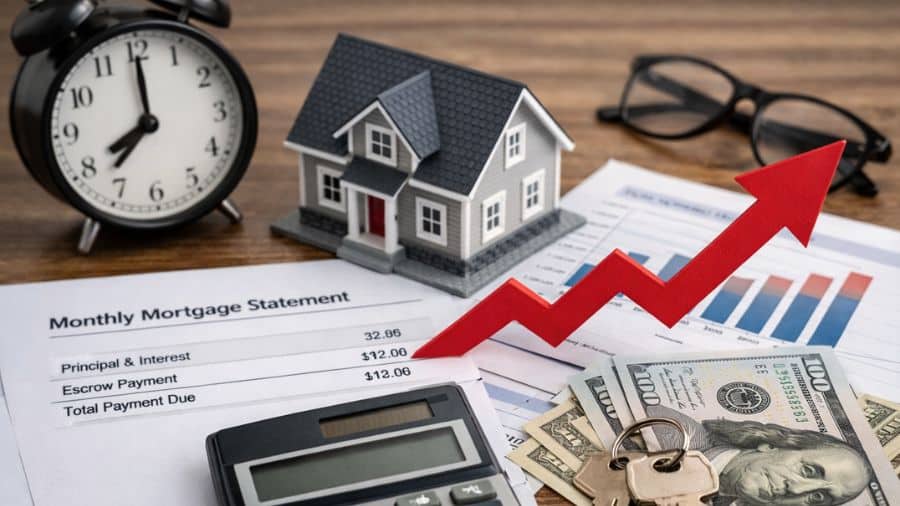
Let’s be honest, a mortgage payment is determined by more than just the loan amount and interest. Homeowner’s insurance, property taxes, interest rate changes, and escrow adjustments are factors that directly contribute to increased mortgage payments. This guide breaks down the major reasons mortgage payments increase and explains how it happens. Stay connected.
How Does a Mortgage Payment Make?
Before understanding why mortgage payments increase, it is important to know what makes up a mortgage payment. Most mortgages are made up of four major components, such as:
- Principal: The portion of your mortgage payment that goes toward principal. This is the amount that you borrow to buy the house. Let’s understand it with an example:
If you borrow 4,000,000 to buy a house, the principal will be 4,000,000. Each month, you will pay a small portion of your amount.
- Interest: Interest refers to the extra money you pay to the bank for providing the loan. The interest rate is calculated based on your loan balance and current market interest rates. An example is:
If your loan interest rate is 9%, you will need to pay interest every month along with a small portion of the loan.
- Taxes: The Local governments of the state charge some property taxes that are also added to the mortgage payment. This fund is paid by your lender on your behalf. Its example is:
If your yearly property tax is $24,000, then you will pay $2,000 per month as part of your mortgage payment.
- Insurance: Homeowners insurance is included in the mortgage, but in all cases, property taxes and home insurance are often paid by escrow. It’s an example:
If your home insurance cost is $12,000 per month, you will need to pay $1,000 per month.
Why Do Mortgage Payments Go Up?
Mortgage payments increase for many reasons, which we will discuss in this blog. Stay connected.
Interest Rate Changes (Adjustable Rate Mortgage)
If you take out an adjustable-rate mortgage, your interest rate can change after the initial fixed period. When the interest rate rises, your monthly payment automatically increases. At the start, a low interest rate makes the loan affordable, but after the rate adjusts, your mortgage payment can rise significantly.
Increase in Property Taxes
Property tax is set by the local government, and it can rise only if home values increase or if tax rates change. If property taxes go up, the lender will collect the additional amount every month to cover the increase.
Higher Homeowner Insurance Cost
Homeowners’ insurance can also rise due to inflation, high repair costs, and increased risk in your area. Even though insurance is often paid through escrow, a higher insurance premium still leads to higher mortgage payments.
Escrow Account Shortage
Escrow is an account used to collect money for property taxes and insurance. In case of an unexpected increase in cost, your escrow account may fall short, which also affects the mortgage payment. You may face a sudden jump in your monthly payment.
Private Mortgage Insurance
In case you pay a down payment of less than 20%, you may have to pay PMI (Private Mortgage Insurance). It can cost more or remain the same until you build enough home equity. After reaching 20% of your home equity, you can request PMI removal.
End of Temporary Discount
Multiple mortgages offer you temporary discounts, such as:
- Lower interest rate
- Payment discount for a few years
When these discounts end, your mortgage payment rises, and you will be affected for some time.
Loan Modification
In case you have a loan modification or payment relief plan, you may face an increase in mortgage payments. Adjusted terms can also raise your monthly payment.
Do Fixed Rate Mortgage Payments Go Up?
Most homeowners think that a fixed-rate mortgage payment stays the same over the loan term. While that is mostly true, fixed-rate mortgage payments can still increase, but not for the reasons people usually think.
Some things that stay the same in a Fixed Rate Mortgage:
- Your Interest Rate
- The Principal and Your Interest Portion
What Causes the Payment Increase of a Fixed Mortgage?
A fixed-rate loan can also be increased because of:
- Property Taxes increase
- Higher Homeowners Insurance
- Escrow account adjustments
- Mortgage insurance
Final Thought
First of all, mortgage payments do not increase randomly; they are affected by multiple factors such as taxes, insurance, escrow, and interest rate adjustments. Understanding how your mortgage works can help you plan better, avoid surprises, and take action when costs rise. This detailed guide has explained everything you need to know about Why Do Mortgage Payments Go Up.
FAQ about Why Do Mortgage Payments Go Up
Q. What do you mean by escrow account?
An escrow account is a type of account that a lender sets up to pay property taxes and homeowners’ insurance on your behalf. A portion of the mortgage payment goes into this account each month.
Q. Are mortgage payments the same increase in all areas?
No, the increase in mortgage payments varies from location to location because every city, country, and state has different property taxes, insurance rates & local assessments.
Q. Does the Mortgage rate increase every year?
The mortgage rate increase depends on the loan type, as a fixed-rate mortgage stays the same over the loan period, and an adjustable-rate mortgage changes periodically.
Q. Does PMI also affect mortgage payments?
Yes, the mortgage payment is also affected by PMI as it protects the lender if your home equity is less than 20%. You need to pay PMI every month until your equity does not reach 20%.