
Top 5 Myths About Reverse Mortgages

Written by Scott Wise

Top 5 Myths About Reverse Mortgages

For many seniors in 2026,  the home equity represents the largest portion of net worth. However, A houserich, cash-poor retirement can be stressful. While reverse mortgages, specifically the Home Equity Conversion Mortgage (HECM), are designed to solve problems which often surrounded by persistent misconceptions.

Reliance Financial believes that informed decisions lead to financial security. By clearing away the late-night infomercial stigmas of the past, and looking at how modern reverse mortgages serve as a sophisticated retirement planning tool.

Here’s The Top Five Myths About Reverse Mortgages That Debunk

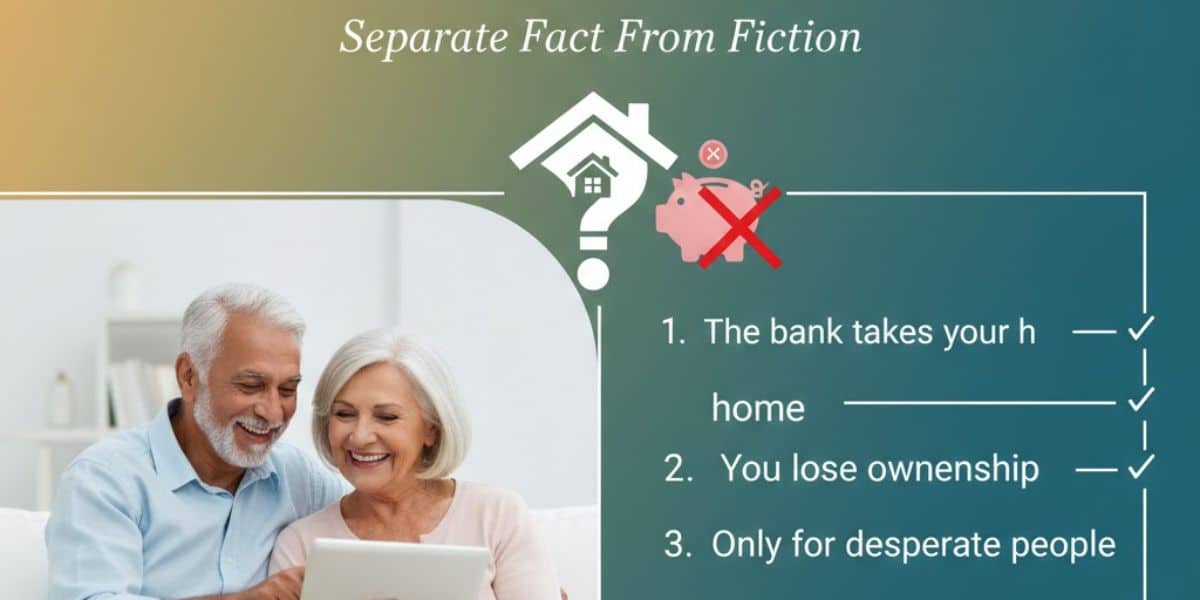
The Bank Will Own My Home

This is perhaps the most common fear among homeowners. Many believe that taking a reverse mortgage is like signing over the deed to the lender.

The Reality: You retain 100% ownership and title to your home. A reverse mortgage is similar to a traditional mortgage in this regard. The lender places a lien on the property to secure the loan, but the title remains in your name. The right to live in the home is in your hands, and you may renovate it or sell it whenever you wish. As long as you maintain the property and stay current on taxes and insurance, the home is yours.

See also  When Is the Right Time to Refinance A Mortgage

A Strategy of Last Resort

Historically, reverse mortgages> were seen as something people turned to when they were out of options. In 2026, the narrative has shifted toward strategic wealth management.

The Reality: Savvy retirees and financial advisors now use reverse mortgages as a buffer asset.

Let us take an example: a reverse mortgage line of credit can be left untouched for years because the unused portion of the line grows over time and acts as a substantial emergency fund. If the stock market dips, a retiree can draw from home equity instead of selling stocks at a loss, allowing the portfolio time to recover.

Inheritor Take The Burden Of Debt

Many people think seniors are leaving a financial mess for their heirs and fear that if the loan balance exceeds the home’s value, the children will have to pay the difference. In reality, HECMs are non-recourse loans, which means no one can ever be held liable for more than the home’s fair market value at the time of sale. For example, if the loan balance is $500,000 but the house sells for $450,000, FHA insurance covers the gap.

Can’t Get a Reverse Mortgage. If I Still Owe Money?

Many believe that a reverse mortgage is only available to those who completely paid off a traditional 30-year mortgage.

In reality, there is no need to own your home free and clea>r. The most popular use of a reverse mortgage is to pay off an existing traditional mortgage by using HECM proceeds to eliminate the old debt, effectively removing the requirement to make monthly principal and interest payments. This instantly increases a senior’s monthly disposable income by hundreds or even thousands of dollars.

See also  Best Low Down Payment Home Loans For 2026

Reverse Mortgage Are Too Expensive Due to High Fees

It is often whispered that the closing costs and insurance premiums on a reverse mortgage make it an EXPENSIVE way to borrow money compared to a HELOC or a traditional loan.

The Reality: While it is true that reverse mortgages have upfront costs, such as the FHA Mortgage Insurance Premium and origination fees. These costs are generally rolled into the loan balance. This means you don’t necessarily need a Cash Out Of Pocket to close the loan.

Besides comparing a reverse mortgage to the alternative, such as selling the home, paying a 6% Realtor commission, and moving into a rental or assisted living facility, then the reverse mortgage is often the more cost-effective way to access housing wealth while maintaining your lifestyle.

Conclusion

The reverse mortgage decision is about replacing fear with facts. Reliance Financial shows you how to retain the home’s title, keep inheritors protected throug>h non-recourse insurance, and use the program as a strategic wealth management tool rather than a last resort. By debunking these myths, a reverse mortgage offers a secure way to access hard-earned savings while aging in place. Retirement in 2026 should be defined by financial freedom rather than restriction.

FAQs about Top 5 Myths About Reverse Mortgage

What is the GROWTH FEATURE on the Line of Credit?

Growth Feature is one of the most misunderstood yet beneficial parts of HECM. Leaving a portion of your line of credit untouched and that available limit actually increases over time at the same interest rate as the loan balance.

Is there a CREDIT SCORE requirement?

It’s not like traditional mortgages that require a very high FICO score because reverse mortgages focus more on FINANCIAL ASSESSMENT. The lender looks at the history of paying property taxes and insurance to ensure you can maintain the home.

See also  How to Get First Time Home Buyers Loan & Grant
Can I buy a new home using a Reverse Mortgage?

Yes. It’s called a HECM for purchase. It allows seniors to downsize or move closer to family by using a reverse mortgage to cover about half the purchase price of the new home, and with no payments required for as long as they live there.

What happens if the spouse is younger than 62?

Non-borrowing spouses have protections that are provided by newer regulations.

Do I still have to pay my Homeowners Association (HOA) fees?

Yes. Just like property taxes and insurance. Homeowners are responsible for any HOA or condo fees.